
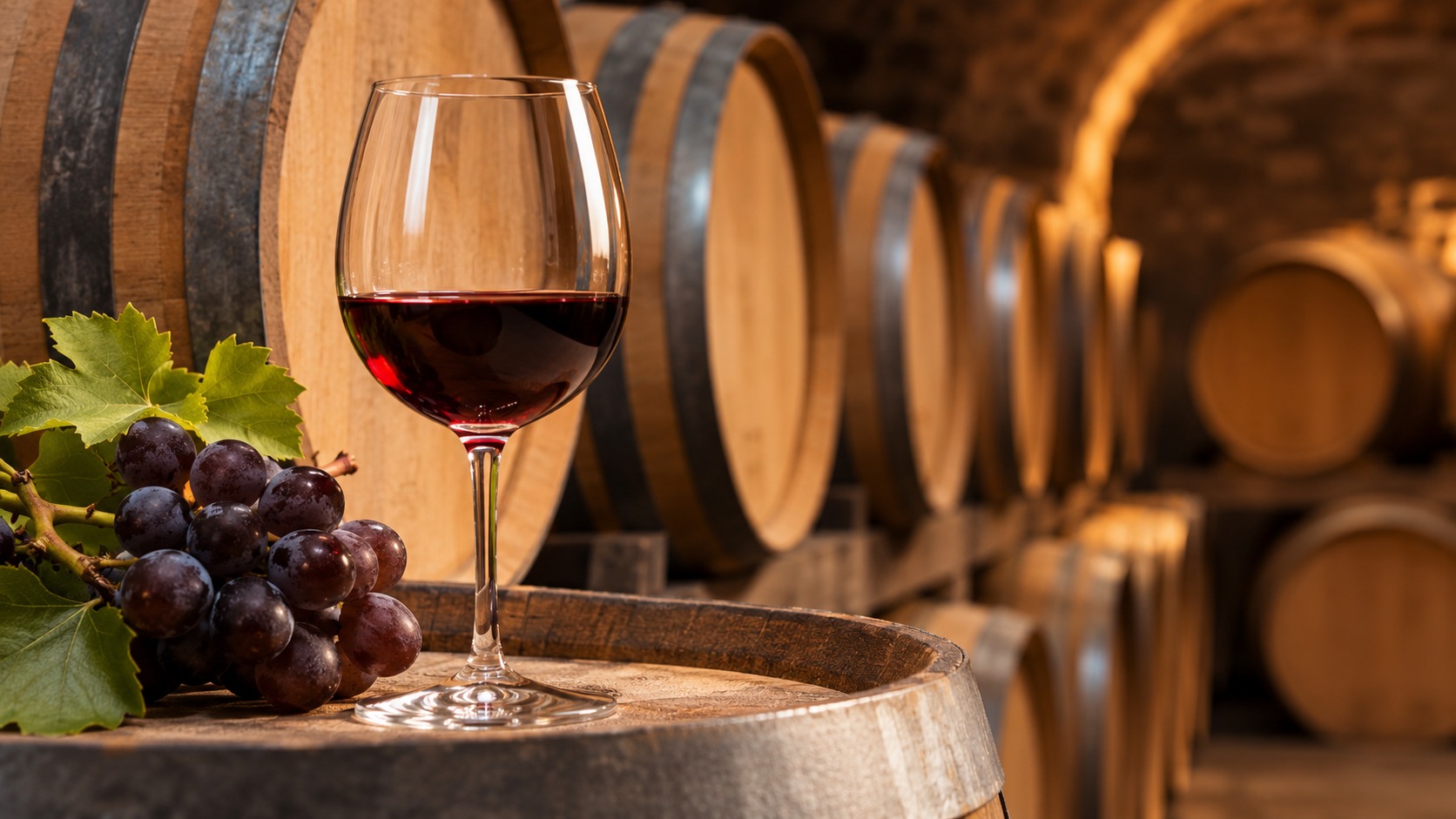
Have you ever wondered how the barrel ageing process influences a wine’s taste, aroma, and overall quality? In this post, we explain everything you need to know.
How Does Barrel Ageing Influence the Taste, Aroma, and Quality of Wine?
Barrel ageing is one of the processes that defines a wine’s personality, aromatic complexity, and structure on the palate. Beyond the time spent ageing, contact with wood allows the wine to evolve, develop new nuances, and achieve a different balance between fruit, acidity, tannins, and aromas.
Understanding how ageing works helps you choose a bottle more confidently, appreciate its characteristics, and discover what makes the wines of the Yecla Designation of Origin so special.
In this regard, it is worth highlighting that at Wineryon, this evolution is part of the identity of our DEMUERTE collection, where different ageing periods and grape varieties come together to create wines with their own distinctive character. This allows us to offer everything from wines with greater structure to more versatile options, with each winemaking process designed to express a clearly defined personality.
What Is Barrel Ageing in Wine, and What Is It Used For?
Barrel ageing consists of keeping wine in wooden containers, usually oak barrels, for a specific period to encourage its evolution. During this process, small amounts of oxygen are exchanged, and the wine’s components gradually integrate, potentially changing its aroma, texture, and structure.
Barrels can also contribute characteristic notes of vanilla, spices, toasted aromas, cocoa, and nuts, depending on the type and origin of the wood, the level of toasting, and the length of contact. As a result, the outcome is not always the same. Well-managed ageing aims to complement the expression of the grapes rather than mask it.
How Does French Oak Influence the Taste and Aroma of Wine?
French oak is one of the most widely used types of wood for ageing wine. This preference stems from its ability to contribute to complex aromatic development and the gradual integration of tannins.
However, the final quality of the wine does not depend on the wood alone. The grape variety, harvest ripeness, winemaking techniques, and ageing period are equally important. The goal is to achieve a balanced wine in which the fruit remains prominent and the aromas contributed by the barrel complement the wine harmoniously.
How Long Should Wine Remain in Barrels to Improve Its Quality?
There is no universal ageing period that guarantees a higher-quality wine. The duration depends on the grape variety, the wine’s structure, the characteristics of the wood, and the desired outcome. Some wines need just a few months for their aromas to integrate, while others can continue to evolve over longer periods.
In this regard, Wineryon’s DEMUERTE collection offers several examples of how French oak barrel ageing is used to achieve distinctive profiles. These include:
– DEMUERTE CLASSIC spends a minimum of 9 months in barrels and combines Monastrell and Syrah. It stands out for its red and black fruit, vanilla, spice, and oak notes, with a smooth, velvety texture.
– DEMUERTE GOLD undergoes a minimum of 12 months of ageing and combines Monastrell, Syrah, and Garnacha Tintorera. Its profile offers ripe red fruit, spices, and silky tannins.
– DEMUERTE DELUXE spends a minimum of 18 months in French oak barrels. Its blend of Monastrell, Petit Verdot, and Syrah develops aromas of ripe fruit, smoke, and spices, with a velvety texture.
– DEMUERTE BLACK is a more extensively aged wine, spending a minimum of 20 months in French oak barrels. Made from Monastrell grapes grown on century-old vines, it features notes of ripe fruit, cinnamon, cocoa, and toasted nuances, alongside an intense, persistent finish.
What Are the Differences Between Young Wine and Aged Wine?
The main difference lies in their evolution and sensory profiles. Young wines tend to stand out for their direct expression of fruit, freshness, and more primary aromas. In aged wines, however, time and contact with wood can add complexity, spicy and toasted nuances, and alter the perception of tannins.
Nevertheless, it is worth remembering that a young wine is not necessarily simpler, nor is an aged wine automatically better. Both can offer excellent quality when there is a good balance between the grape variety, the winemaking process, and the final result.
How Does Barrel Ageing Influence the Texture and Tannins of Wine?
During ageing, changes occur that can help tannins feel more integrated and give the wine a rounder texture. Gradual oxygen exchange and the evolution of phenolic compounds transform the tasting experience.
In wines such as DEMUERTE GOLD, DELUXE, and BLACK, these nuances are reflected in profiles that combine structure, aromatic intensity, and a silky mouthfeel.
How Can You Tell Whether an Aged Wine Is Suitable for a Particular Occasion?
Choosing one wine over another depends on the type of food, personal preferences, and the occasion. For meat dishes, stews, mature cheeses, or recipes with intense flavours, a full-bodied red wine can make an interesting pairing. For lighter meals, it is worth considering wines with fresher fruit expression and a structure that complements the dish.
If you are looking for a wine for a special dinner, DEMUERTE DELUXE could be an interesting choice thanks to its notes of ripe fruit, smoke, and spices. For those who prefer an intense wine with a persistent finish, DEMUERTE BLACK is another alternative. DEMUERTE CLASSIC and GOLD allow you to explore other nuances within the collection.
You can discover all these wines in our DEMUERTE wine collection.
Which DEMUERTE Wines Are Aged in French Oak?
DEMUERTE CLASSIC, GOLD, DELUXE, and BLACK undergo different periods of French oak ageing: a minimum of 9, 12, 18, and 20 months, respectively, according to the information published on the Wineryon website.
How Should an Aged Wine Be Served?
The ideal serving temperature depends on the wine and its structure. For the DEMUERTE BLACK, GOLD, DELUXE, and CLASSIC red wines, Wineryon recommends serving them between 16 and 18 °C. It is best to avoid excessively high temperatures, as these can make the alcohol stand out too much and make the aromas harder to appreciate.
Ageing: An Essential Part of a Wine’s Personality
At Wineryon, we see ageing as a tool for expressing the personality of our wines. That is why our DEMUERTE collection combines the identity of Monastrell from the Yecla Designation of Origin with different grape varieties and ageing periods, from the versatility of DEMUERTE CLASSIC to the intensity of DEMUERTE BLACK.
Discover the DEMUERTE collection and find the aged wine that best suits your tastes and special occasions.
